Mar 112010
 

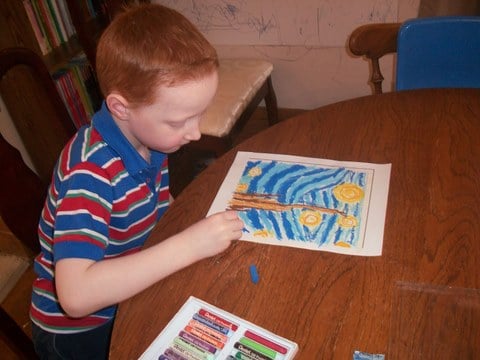
For some of us the idea of doing hands-on projects with our children can be daunting. I am neither crafty nor artistic, and I don’t enjoy making and cleaning up messes during the course of our school day. However, I have come to the conclusion that with a little bit of forethought and planning, including hands-on activities in our history lessons can be painless and fun.

Most importantly, the right project can bring a historical topic or time period to life for children. I am always amazed when one of my children brings up a project we completed several months ago and is still able to associate it with the concept about which we were learning.

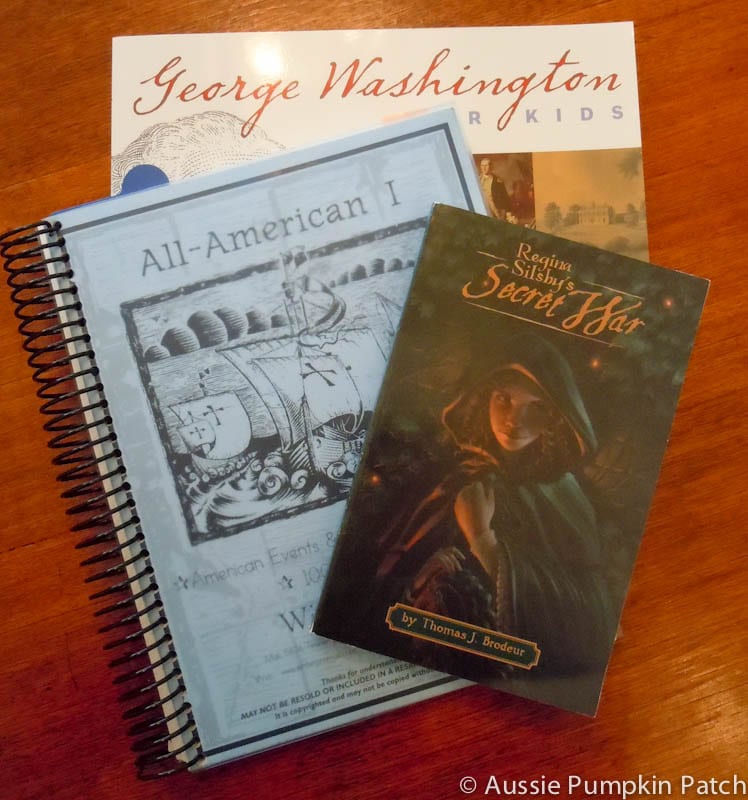
Today I thought I would share with you a couple of my favorite resources for user-friendly, hands-on history projects. Most of these books can be found at your local library or an online bookseller.

Most of the games, crafts, recipes, and other projects that we have done in these books were moderate to easy for my 6 and 8 year old to complete, along with a little bit of help and guidance from me. The time required to complete each project was anywhere from 15 minutes to an hour. (O.K., except for the candle-dipping. That one required a lot of help from me and took a long time to complete, but the kids have not forgotten it!)

For most of these projects, we used supplies we already had on hand or recycled household items. Some of the projects do require materials that you would probably have to purchase, for example, the paraffin wax for the candles.

I hope that you’ll check out these resources and find them helpful in spicing up your history studies with some hands-on fun.

Written by Shannon, who is a history-buff at heart and enjoys blogging about her family’s homeschooling adventures at Song of My Heart.

Mar 082010
 

There are so many interesting animals to learn about.  Our favorite family field trip is to the local zoo.  We have been going since our oldest was an infant and still enjoy it 8 years later with five children.  It will come as no surprise to you, then, to find that we love studying animals in homeschool.  Being a unit study family, we have made many units on our own.  This past year we found a textbook that is perfectly adapted to unit studies.

Exploring Creation with Land Animals of the Sixth Day is the third in a series of Zoology books offered by Apologia Science.  We looked at each of the zoology book’s topics, samples, and table of contents before my oldest chose to begin with Zoology 3 because so many of her favorite animals from the zoo are covered in this book.

Things we love:

  • Written in an easy conversational style directed at the student - this makes it a perfect read aloud for our family.
  • Beautiful photography - who is not inspired by amazing photographs of animals?
  • Christian Perspective - a book that openly celebrates God’s creative powers and his amazing designs.
  • Experiments that work - directions lay out each step, a materials list is in the front of the book, and experiments really apply to the topics in each chapter.

With 14 chapters packed full of information this book can fill an entire academic year.  We use it a little differently, picking it up when we want to do a unit study about a specific animal family, then putting it away again until we’re ready for more animal adventures.  That means we have only finished a little over 1/3 of the book this year.  My eight year old loves the book so much that she has read it nearly cover to cover already on her own.  She takes it to her room and reads during quiet time.  Many times this year she has come to tell me all about the things she has learned, or to ask a question the reading has brought up.

While we do not have many textbooks in our home, I have found the Exploring Creation series to be a wonderful fit for our unit study family.  We will be investing in the rest of the series in the coming years.

Written by Tristan, mom to 5, homeschooling through unit studies with a side of lapbooks.  You can visit her at her blog, Our Busy Homeschool.

{Disclaimer because the FTC says I have to:  I bought this book with my own money, and yes, we really use it.  All opinions presented herein are my own.}

Elephant image courtesy of Tim Seed / FreeDigitalPhotos.net

Feb 282010
 

What do you want to be when you grow up?” is a question most children love to answer. Those answers change many times through the years.  When I came across a sale for the Wanna Be series from The Old Schoolhouse, which are unit studies about different careers, I grabbed my debit card and ordered.  We love unit studies and I had nothing for careers in yet.  The series covers the following ten careers:

  • Firefighter
  • Veterinarian
  • Chef
  • Military
  • Doctor
  • Police Officer
  • Missionary
  • Farmer
  • Artist (upcoming release)
  • Pilot (upcoming release)

While these units are written for ages 4 – 10, even my husband and I learned a lot as we used our first two units.  I love that these units are written from a Christian homeschool perspective. I love reading how families make these careers work in their life.  The information for high school homeschoolers is wonderful, giving them direction on how to prepare for that career, while the end of unit activities have fun games and activities for younger kids.

What’s inside a unit?

  • Information pages about the career, with information for preschoolers through high schoolers.
  • Crossword puzzles
  • Coloring pages
  • Handwriting Practice
  • Vocabulary
  • Copywork
  • Applied math problems – relating to the career.
  • Word Search
  • Creative Writing Prompts
  • Quiz
  • Fill in the Story
  • Experiments
  • End of Unit Activities – games, memory verses, and ideas for great themed parties.
  • Great resource lists that are internet linked.

Our first adventure centered around a police officer’s job as peace keeper and law enforcer with When I Grow Up, I Want to Be a Police Officer. Each day we read a few pages from the e-book as a family and did activities.  I used the library list to gather books for our unit study basket, which we explored throughout the week.  You can find the ones we chose HERE.  We found out the tools of the trade, training needed for the job, and even some of the science behind fingerprinting.

My oldest wrote a story called The Jewelry Thief (read it HERE ) in response to one of the writing prompts in the unit.  She really enjoyed learning about how police use clues to solve a crime.  We finished up our unit with a trip to our local police department.

Our next Wanna Be adventure took two weeks using When I Grow Up, I Want to Be a Firefighter. We were able to compare many things we had learned about becoming a police officer with the path to becoming a firefighter.  Again, the library list and end of unit activities gave me plenty of ways to include my younger children.  Our second field trip in a month led us to Fire Station 3, where we saw up close and personal many of the things we had learned about during the unit.

The Wanna Be series is a great fit for our unit study family. Each title is a complete unit study.  I do not have to find books at the library unless I want to.  Many creative ideas are included for some themed games and activities perfect for my younger crowd, while the information is meaty enough that we will reuse these when the kids are older.  My children are already debating which career we will learn about next – I hope they choose chef!

Written by Tristan, mom to 5, homeschooling through unit studies with a side of lapbooks.  You can visit her at her blog, Our Busy Homeschool.

{Disclaimer because the FTC says I have to:  I bought these books with my own money, and yes, we really used them.  All opinions presented herein are my own.}

Feb 152010
 

On any given day a stranger stumbling unsuspecting into our home could—and should—expect to meet with any of a large variety of animals.  The possibilities range from the exotic to the mundane:  a maned wolf, a gorilla, a fox, a hippo, a mountain goat, a cheetah, a cat, a puppy.  The animals residing here really just depend upon the current whimsy of my three very imaginative children, whose active minds allow them to take on the characteristics of any animal with which they have become familiar.

Perhaps it comes as no surprise for me to share that we are studying animals in science.  In fact, we have so enjoyed our time with the animals that I have extended it well into the scheduled human body time.  And I am not one bit sorry.

The kiddos and I have particularly enjoyed a series of books that we have checked out from the library written by Cathryn Sill and illustrated by her husband John Sill.  Each title includes the word “about” along with the variety of animal found in the book, and is subtitled A Guide for Children.  There are currently twelve books in the animal series, most of which detail a phylum or class of animal, though a few are more specific.

●About Birds

●About Mammals

●About Reptiles

●About Insects

●About Amphibians

●About Fish

●About Arachnids

●About Crustaceans

●About Mollusks

●About Marsupials

●About Rodents

●About Penguins

There are also three books in a series called About Habitats.  Included are Desserts, Wetlands, and Mountains.

The animal books are written with deceptive simplicity and contain beautiful, realistic illustrations of the animals in their natural habitat. About Fish opens with a two-page spread and the statement “Fish live in water.” It is accompanied by a picture of a brown trout swimming between two rocks.  The next couple of two- page spreads assert that “(t)hey may be found in nearly freezing water . . . or in warm tropical water.” There are pictures of an arctic char hovering in water below a thick coating of ice and a queen angelfish in a coral reef.  The book covers the topics of fins, gills, scales, camouflage and other protective devices, schools, fish eggs, live baby fish, fish as plant and meat eaters, and ends by touching on a note about conservation and the importance of fish to the world as a whole.  All information is written in single sentence format and accompanied by a stunning picture.

All of the books in the series utilize a similar format.  Each contains simple, but informative sentences and lovely pictures, which are organized into two-page spreads.  Each book ends with a statement that the animals being studied are important. About Birds discusses feathers, baby birds hatching from eggs, a variety of nests, bird movement (flying, swimming, and running), flocking birds, solitary birds, the use of bills, bird song, bird size, and the importance of birds. About Mammals tells us that mammals have hair or fur, drink milk from their mothers, that some are born helpless while others must move soon after they are born, move by running, climbing, swimming, or flying, eat meat, plants, or both, live in cold, hot, and wet places, and that mammals must be protected.  The end of each book includes an index of the illustrations and additional information to go along with each picture.

I have found the series to be perfect for my budding naturalists, offering just the right information for my lower elementary and preschool children. The language is efficient, but precise, providing an excellent foundation for further study. Of course, the illustrations are truly the crowning glory of each book. It was an added benefit to realize that each book is inscribed with a tribute “To the One who made the . . .” and names the animal group found within that particular book.

The About . . . animals series by the Sills combines beauty with information in an irresistible way.

Most days find Susan on the couch reading to her children, in the floor “playing” math, and generally in the middle of a good-sized mess.  A love for the Lord, a love for her little ones, and a love of learning have led Susan and that  wonderful man she married to an educational philosophy that is Well-Trained Mind-inspired classical and Charlotte Mason, with a touch of the traditional.

Feb 132010
 

There are so many expensive homeschool resources, but one of the best science investments we have ever made cost less than $15.00.  We purchased a Pocket Microscope($13.95) several years ago from Home Science Tools.  With two AA batteries, and three zoom levels (60X, 80X, 100X) this little microscope can help even a 2 year old explore the world around them.  A small, lightweight base has clips for exploring slides, which is nice, but be sure to read on to learn how you can use this microscope without them.  We do have a Kid’s Microscope Slide Set($10.95), also from Home Science Tools.  Put on the slide, adjust the focus with a handy dial on the side, and give it to your toddler to look through like a telescope.  Really, it works!  Here is my two year old Daniel using it. 

Because of the transparent cover protecting the light bulb you can take off the base and put the microscope up against just about anything to take a closer look.  In the house this may be a favorite toy, the carpet, or the hairs on your arm. 

There are plenty of possibilities, even when confined to the house on a cold, wet day.  Catch the cat and look at her fur, see what your peanut butter sandwich really looks like, and check out the dustbunnies hiding in the corner.  After that be sure to venture outside with the microscope.  Take it in the backyard or on a nature walk.  Now you have opened up a whole new world to explore.  We have seen the bark on our trees, the tomato still growing on the plant, a flower petal, dirt, grass, and rocks.

Our pocket microscope has survived use by many children from age 18 months to 8 years.  We have not even needed to replace the light bulb (a bulb costs $1.00 HERE).  One of these days we will invest in a nice student microscope, but we will always keep a pocket microscope on hand for fun exploration out of doors.

Written by Tristan, mom to 5, homeschooling through unit studies with a side of lapbooks.  You can visit her at her blog, Our Busy Homeschool.

Jan 172010
 

We’re a unit study and lapbooking family.  We love to take a week, two weeks, even a month to explore a topic.  We have used the Magic School Bus series to shape our units from the beginning.  As a matter of fact, we spent one entire year doing science units that centered around the Magic School Bus books and there are still more left to do!  With 5 children at my house this series is bound to have a book to interest each of them.   Here is our home library of Magic School Bus books. 

 There are several book series available now.  The classic series consists of 10 books covering topics from the 5 senses to bees, space to dinosaurs.  Note: The books are not from a Christian viewpoint, and as such you will come across references to ‘millions of years’, but these information packed books provide a great opportunity to discuss your beliefs with your children on such topics when you feel they are ready.  My 4 year old Emma’s favorite book in the Classic series is The Magic School Bus Inside the Human Body, which takes you on a digestive system adventure.  Most of my children can tell you all the parts of the digestive system thanks to this one.  It is presented like an amusement park ride, so it is pretty easy to remember.  5 year old Joseph’s pick would be The Magic School Bus Inside the Earth.  He loves when the bus turns into this giant drill and tunnels into the earth.  This books was also his first introduction to caves.  After reading this one he really enjoyed watching the caves episode on Planet Earth.

 The Magic School Bus was made into a series for television, some of which is now available on DVD.  This series spawned 31 more books, the TV books.  Topics covered include:

  • Color
  • Migration
  • Heat
  • Bats
  • The Water Cycle
  • Germs
  • Habitats
  • Plants
  • And Many More!

 Our favorite book in this group is hard to pick.  My 2 year old Daniel’s favorite is The Magic School  Going Batty

 There are 6 books in the Liz series, centered around the class lizard’s adventures.  Liz Looks for a Home is our favorite in this set.  There are even Magic School Bus easy readers, including one we used when studying dentists and teeth called The Magic School Bus and the Missing Tooth.

 Our favorite set is the Magic School Bus chapter books.  There are 20 books in this set.  Some cover topics from earlier books, like space or dinosaurs, but these chapter books are filled with information beyond the other series’.  We loved The Search for the Missing Bones, which we used to learn the major bones of the human body.  We use these as a read aloud during a unit.  Makayla, at age 8, has read all the Magic School Bus books and narrowed her favorites down to two.  The Magic School Bus Meets the Rot Squad from the TV series is all about decomposition.  Her favorite from the chapter books is Penguin Puzzle, where the bus ends up in Antarctica.

 There are many other Magic School Bus Resources available, including computer games, DVDs, and the official website.  On the website you will find:

 Take a field trip from your home with any of the Magic School Bus library!

Written by Tristan, mom to 5, homeschooling through unit studies with a side of lapbooks.  You can visit her at her blog, Our Busy Homeschool.

Nov 082009
 

draw write now 1

We enjoy incorporating art into our unit studies. There are many ways to accomplish this, but one of my favorites is to have my children do a lesson from Draw Write Now, a series of books containing beginning drawing lessons and handwriting practice for primary and elementary students. The author, Marie Hablitzel, developed this collection of lessons for her second-grade students after seeing that they were becoming frustrated with their drawing skills and bored with tedious handwriting drills. Starting with the idea that drawing and handwriting require many of the same skills, Mrs. Hablitzel began designing lessons  that combined the two. She also integrated these lessons with other subject areas such as reading, history, geography, and science. The result was students who became enthusiastic about learning to draw and write.

The series consists of eight volumes which can be purchased separately or as a set:

Book 1 – Farm Life, Kids and Critters, Storybook Characters

Book 2 - Christopher Columbus, Autumn Harvest, The Weather

Book 3 -  Native Americans, North America, The Pilgrims

Book 4 - The Polar Regions, The Arctic, The Antarctic

Book 5 – The United States, From Sea to Sea, Moving Forward

Book 6 – Animal Habitats: On Land, Pond and Rivers, Oceans

Book 7 – Animals of the World: Tropical Forests, Northern Forests, Forests Down Under

Book 8 - Animals of the World: Savanna Animals, Grassland Animals, Mountain and Desert Animals

You can see the wide variety of topics, which makes it easy to find a drawing lesson that relates to what your students are learning about.

Each volume contains approximately twenty-four lessons, laid out in a clear, straight-forward manner. Each lesson includes five parts:

1. Introduce the subject – Information and questions are scattered throughout the books that the teacher can use to spark the students’ interest in the subject they will be drawing. There are also suggestions for books related to the topics.

2. Draw the subject – This is my favorite part of each lesson because the author has simplified the drawing process by breaking it down into easy steps, which are pictured for the student. The teacher is encouraged to help students see the objects they are drawing as combinations of lines and simple shapes.

3. Draw the background – Students are encouraged to be creative and use their imaginations as they add details to their drawings.

4. Practice handwriting – Students copy text that relates to the subject of the drawing. I’ve found that my children are much more excited about handwriting practice when it relates to something they have drawn.

5. Color the drawing – Tips are included for the best ways to color certain shapes so as to enhance the child’s drawing and not detract from it.

Each book is rounded out with additional information that I have found very helpful:

  • Teaching tips that give great insight and ideas for helping students to succeed at the five parts of each lesson.
  • One lesson in each book is dedicated to helping the student draw something from their imagination, as they are encouraged to think about things like how people move, positioning of a horizon line, choosing the size of a subject and deciding upon its placement on the paper, and more.
  • “Learn More” sections that contain supplemental information about the subjects being drawn.

We have thoroughly enjoyed the Draw, Write, Now series. After using these lessons, my reluctant artist has gained confidence in his drawing ability and even enjoys drawing now. And since I’ve never had an art lesson in my life, but have always wanted to learn to draw, it has been fun for me to do these lessons along with my children.

You can do a sample lesson from Book 1, the easiest of the eight volumes, by visiting the Draw, Write, Now website, where you’ll find much more information about this series.

Written by Shannon, who enjoys learning to draw alongside her three children. She can be found blogging about her family’s homeschool adventures at Song of My Heart.

Aug 232009
 

Have you ever wondered if your child was understanding and comprehending what they were reading? My oldest son was a late bloomer when it came to reading and I wanted to make sure he understood the books that I chose for him. I came across a wonderful website called Fortunately For You Books.

Fortunately For You Books carries a variety of hands on ways of teaching reading comprehension with your child’s favorite stories.  Our first visit to their site brought us to their Magic Treehouse Pockets of Time Series. These books were popular with my son but I wanted to make sure he was really reading and understanding them. We loved this approach so much we have used almost every type of product they have in their store.

My son now loves to read, he now understands what he has read, and enjoys doing his schoolwork. All with the help of Fortunately For You Books.

Fortunately For You Books has several products which include the following.

Pockets of Time-
Pockets of Time takes your child’s storybook and turns it into a hands on learning experience. For every chapter in the story, there is a set of cards with the chapter’s main storyline on them. Your child colors each card as described and puts them in order of the events in the chapter. Each chapter cards are placed in there own individual pockets and stored in a folder of your choice.

Some titles include- Magic Treehouse series, Charlie & The Chocolate Factory, Little House series, The Little’s, Sarah, Plain & Tall series and much more.

picture-1

Pockets of Time- Magic Treehouse- Tonight on the Titanic

Little Pockets of Time-
Little Pockets of Time is designed for preschool aged children. Basic skills from the story are taken and reinforced through matching activities. They then place it into a pocket.

Some titles include- Eric Carle books, Peter Rabbit’s Halloween

Remember Me Pockets-
Remember Me Pockets is similar to the pockets of time in that it uses a pocket to store the activities. This has special remembrances all through the month. The activities consist of fun, historical and reflective information.

Each month consists of the following pockets:

Author birthdays
Remember Me Monthly
Remember Me Weekly
Remember Me Daily
If you have a child who has a birthday that month there is a special pocket for them too.

For instance, you will learn about holidays, special events, special people, and daily events that happen in that particular month. What a great way to add a little extra to your curriculum without having to do the research for it. It goes along each month’s calendar and can be added easily to what you’re already studying.
Sticker Studies-
Sticker Studies is another way for your child to learn with literature without the boring drills or writing. With each study you print off the sheets which go along with the pages in the story. You  print off the answers onto a sticker sheet or colored paper and glue. As you read the story you answer the questions in the study by placing the correct stickers in the boxes next to the questions.

My family has found this to be so much fun. They are excited about finding the correct answer and putting the sticker on the appropriate question.

 Picture of P is for Pilgrim Sticker Study

Picture of P is for Pilgrim Sticker Study

Books in this study are:
P is for Pilgrim, I is for Idea, S is for Star, and D is for Democracy

Lines of Time-
Lines of Time is similar to the Pockets of Time but instead of a pocket, a timeline template is given. The story is represented by boxes and graphics which are placed almost like a board game. You then have extra graphics or words to place in the appropriate spot to put the story in sequential order. You then can see if your child has read and understood the story. You can connect them and place on a wall or in a binder or folder.

Picture of Lines of Time- Twas the Night Before Thanksgiving

Picture of Lines of Time- Twas the Night Before Thanksgiving

Some titles in this series are:
Tuck Everlasting, Twas the Night Before Thanksgiving, Twas the Night Before Christmas, A Wrinkle in Time and more.

Also included are Little Lines of Time for your preschooler. Titles include:
Happy Thanksgiving, Biscuit, Dream Snow and Corduroy’s Best Halloween Ever!

Tags of Time-
Tags of time have the similar concept as the Pockets of Time, but use tags instead of pockets. Each tag comes with a chapter number clipart and picture to glue where ever they would like on the tag and then they color each main idea strip and glue them in order of the events in that chapter. This is great for the older elementary children who are ready for chapter books.

Some titles in this series include:
Nim’s Island,  The Secret Garden, Little House Series, The Courage of Sarah Noble.

Pockets of Copywork-
Pockets of Copywork is four weeks of copywork put into a pocket. Each month is themed with lyrics, poems, bible verses and quotes. Some themes include, freedom, change, hope, thanks, joy, fall, summer, heritage, knowledge, service, love, plenty, and spring.

Grammar By The Book:
Grammar By The Book is a perfect way to reinforce grammar with any book your child would like to read. It’s not restricted to grammar books or worksheets but allows you to teach the grammar rules through everyday reading. Your child can see the grammar rules being used and applied as they read each story. This is a great way to teach the rules without using stuffy worksheets and drills. You can use it with every book and grade level in your home.
Check out what Fortunately For You Books has to offer. They have something for all ages from preschool to high school. Each month they feature a free product of the month and also offer a Dollar Menu. You can visit their website @ www.fortunatelyforyoubooks.com.

Written by Lynn Pitts, mom of 3, from Big Sky Country Montana. You can read more about our life at Learning by Living.

Jun 242009
 
sketching horse Black Beauty

Books from Beautiful Feet History of the Horse

The History of the Horse is a Christian, living books based unit study published by Beautiful Feet (BF) Books.  I bought History of the Horse for my fourth grade daughter, and I am so pleased with my choice! It was a huge hit with her! She mostly loved the great stories and the drawing assignments integrated into the lessons. I felt it was a great curriculum for introducing her to more independent learning and research skills.

The term “history” in the title is a bit misleading. The teaching guide does order the books in chronological order, and there is information about horse breeds and the history of them. However, BF History of the Horse is not truly a history program. Since the bulk of the work is reading novels, answering questions, notebooking, sketching, researching, and writing reports, I consider this better classified as a language arts program.

sketching horse

Sketching Horses

The course is organized into 91 lessons. The guide recommends the student cover  three to five lessons each week. However, I found that the assignments for one lesson were actually quite short. So I generally assigned my daughter Sprite two lessons each day. Doing eight lessons per week, we completed the program in about four months.

Each lesson includes a reading assignment and an activity related to it. The activity may be sketching a horse, answering some comprehension questions, researching something that was mentioned in the reading, writing a report on a famous person or event, copying a Bible memory verse, or mapping the location of the novel.  Usually all of the assignments are put into a History of the Horse notebook. You do need to know that History of the Horse is a very Christian program. Besides the Bible memory verses and copywork, many of the discussion questions are written from a Christian perspective.

horse books

Beautiful Feet History of the Horse Books

The core of the program is a set of horse novels written by Marguerite Henry:  King of the Wind; White Stallion of Lipizza;  Justin Morgan Had a Horse;  Misty of Chinocoteague;  Brighty of the Grand Canyon; and Mustang, Wild Spirit of the West. In addition, there are Black Beauty and Black Stallion as well as three non-fiction books: Album of HorsesSmithsonian Handbooks: Horses a DK book by Elwyn H. Edwards, and How to Draw 50 Horses by Lee J. Ames. There is also a set of regular playing cards that feature images of various horse breeds. The idea is that as you play other card games, you will learn some of the names of horses and be able to identify them by sight.

BF  recommends this unit study for 3rd through 7th grades, but actually most of the books are written at a 5th grade level. If your child is reading comfortably at that level, she could easily do the reading assignments independently. That’s how we chose to use this unit study, and it was a first for my fourth grader to read alone in her room and do her assignments by herself. You can see more images of my daughter’s History of the Horse notebook at this Flickr set.

Written by Jimmie, Charlotte Mason flavored mom of one.

Jun 202009
 

Do you enjoy unit studies?  Do you enjoy unit studies that are already prepared for you?  Do you enjoy unit studies that require little to no gathering of materials on your part?  Do your children enjoy learning on the computer?  Do you desire for your children to be able to learn independently?  If you answered ‘yes’ to one or more of my questions, then Brandenburg Unit Studies might be for your family.   

brandenburg_studies_150px
Visiting the Brandenburg Studies website  will lead you to more than 40 in-depth unit studies that can either be purchased on a CD or downloaded immediately to your computer as an e-book. 

Just what are Brandenburg Unit Studies? 

Very thorough, internet-linked lessons and activities, including quizzes, tests, notebooking, projects, literature and other media to help your child learn about a topic in as independent a way as possible.

What will you find in the unit?

  • A section of hints for the teacher                  
  • A daily lesson plan chart that you are encouraged to print for yourself and your child.  This chart tells you how long the unit lasts and what lessons to do each day.  Children who can read on their own are encouraged to do much of the learning themselves, with mom or dad being an overseer of the learning.  You’re encouraged to put a copy of the daily lesson chart in the front of a notebook for your child so they can take responsibility for doing the daily lessons.  
  • Suggestions for literature and videos that go with the theme.  Like me, Mrs. Brandenburg believes children retain knowledge better when additional books and videos are added to the unit.  “Living literature” lists include ideas for independent reading and family read-alouds.  Most units last anywhere from one to three months, which allows plenty of time for diving into some good literature.          
  • Daily lessons for children.  The units are in PDF format, so as you scroll through the book, you will find the daily lessons in order.  Much of the daily lesson time is spent reading information from the computer.  Some of the lesson is located in the PDF file, but your child will also leave the file sometimes as they click on safe internet links.  The internet links lead your child to internet pages with more information about the lesson’s subject, to quizzes and tests, to online games and other very safe pages that enhance the particular lesson.
    The daily lessons, even though often taking place in front of the computer, are filled with colorful pictures to give your child great visuals for understanding.  They are also varied.  In other words, the student won’t simply be reading information from the computer and taking a quiz everyday.  One day they might read and take a quiz.  The next day might be a video clip and an online game.  The next might be reading and labeling a diagram for their notebook.  And the next might be an art or craft project.
  • Worksheets, notebooking pages and other various printables.  Your child will be encouraged to learn information from the computer lessons and either add the information to a prepared notebook, complete and online activity or complete one of these pages.
  • An idea list for final unit projects.  This is a list of hands-on projects that your child can choose from in order to “show what they know” as the unit comes to a close.    
  • Based on the topic, the units might include vocabulary, map work, Bible references, and/or a final test.  Most tests and activities completed on the internet can be printed out to include in the student’s notebook. 
  • Since keeping a unit notebook is highly encouraged, each unit provides directions for creating one.

Ancient History

American History

G.A. Henty

Science

Each of the units is recommended for various age levels from Kindergarten through High School.  Be sure to check the suggested age before purchasing!

What if I don’t want to “set my child free”?  Even though the units encourage student independence, mom or dad can still be “hands-on” in the unit if they prefer.  Like any other unit study, these can be used in whatever way suits your family’s needs. 

Are the prices fair?  I believe the prices are very reasonable.  It won’t set you back too much to try at least one of the units to see if the style is a fit for your family. 

One more thing.  Struggling readers may have some difficulty since there is a lot of reading and writing necessary to complete each unit.  Children who prefer hands-on projects may not be a good fit for these units, either.  But with the variety of daily lessons, I think most students will find the studies to be interesting and enjoyable. 

Cindy, a unit-study, Charlotte Mason, Classical sort of mom who likes to surprise her children with varied ways of learning.  These units are one of those surprises!