Aug 302009
 

Last month Korey reviewed the Handwriting Without Tears curriculum and the workbooks for first grade and up that go along with it.

We have also used this program in our homeschool with great success since my oldest was in Pre-K, so I thought I would highlight some of the HWT hands-on materials that have been a huge benefit for my children.

These multi-sensory materials are designed for children who are getting ready to learn to write and for those who are developing their handwriting skills. I have used these with my children starting at age three, and even my oldest at age seven still enjoyed and benefited from using them.

  • Capital Letter Wood Pieces – These are used to teach formation of the capital letters. For example, students learn to take a “big line”, put it on the left, then add a “big curve” on the right to make the letter “D”.  woodletterpiecesThe wood pieces are also used to teach children how to make “Mat Man”, a simple stick figure person. Children also learn positional concepts such as top, middle, bottom, left, and right as you use the pieces with them. This vocabulary, as well as “big line”, “little line”, “big curve” , “little curve”, is used in teaching letter formation with all of the HWT products.
  • Roll-A-Dough Lettersrolladough1 – This product includes a 4″ x 6″ plastic tray, a set of 18 double-sided, laminated capital letter and number cards, and a container of dough. A letter or number card is placed in the plastic tray, and then the child forms the dough into the shapes needed to make the letter and places them over the letter card. The dough is terrific for strengthening finger and hand muscles, as children roll, push, and shape the dough into “snakes” to form their capital letters. The tray can also be used for letter practice with rice, shaving cream, or sand. (Occasionally I am brave enough to do the “messy” stuff because my children are such tactile learners and really do enjoy it. I just make sure there is a plastic tablecloth underneath the work surface for easy clean-up.)
  • Stamp-and-See Screen – My children have enjoyed all of these HWT materials over the years, but the Stamp-and-See is probably their absolute favorite.stampandseescreen This is a 4″ x 6″ magnetic screen that comes with a set of four magnetic wood pieces (big line, little line, big curve, little curve), and a chalk-sized magnetic writing tool. You use the laminated cards that come with the roll-a-dough set, place one on the magnetic screen, and then use the magnetic wood pieces to stamp the letter on top of the card. When you remove the card, voila – you have made the letter! After working with the magnetic stamps, you can then use the writing tool to trace over the letter card. Once again, when you remove the card, you can see the letter that you’ve made. I want to mention that the writing tool is the size of a small piece of chalk. HWT encourages using short pencils and pieces of chalk to help children achieve a correct pencil grip as they are learning to write. This approach has worked wonders with my own children’s pencil grips.
  • Slate Chalkboardslate-chalkboardThis is another favorite in our home. It is a 4″ x 6″ slate in a wood frame with a smiley face in the top left-hand corner. The smiley reinforces top, bottom, left, and right, and also reminds children to start their letters at the top. The chalkboard is used in combination with a method called “Wet, Dry, Try” to teach letter formation. First the teacher writes the letter with the chalk, the child uses a wet sponge and makes the letter strokes to erase the letter, and then uses his finger to trace over the wet strokes. Then the child uses a paper towel to dry the wet strokes. Finally, the child gets to use the chalk to write the letter. The child has practiced writing the letter four times using four different methods and typically has had fun doing it!

The Handwriting Without Tears Site has a series of short videos that demonstrate how these materials are used with children. I’ve learned a lot from watching them, and I think that whether you use these products are not, these videos provide you with great examples of how to teach letter formation. You can click on the following links to see them. (You may need to scroll down a bit on the page to see the videos.)

Roll-A-Dough Letters

Stamp-and-See Screen

Slate Chalk Board

Using this tactile approach to teach letter formation has helped my children to gain confidence in their handwriting skills while having fun at the same time. If you’re interested in learning more about the Handwriting Without Tears program and the many other materials they have to offer, I encourage you to visit their website.

Written by Shannon, who can be found blogging about her family’s homeschool adventures at Song of My Heart.

Aug 292009
 

Often I am asked by new homeschoolers about how to make an overall plan for the school year. They are looking for the nuts and bolts of putting lots of great ideas together because they tend to get overwhelmed by whole process. I shared the following ideas with a friend and I hope they help and encourage readers here at Curriculum Choice.

I try to emphasis to new homeschoolers that your “school day” extends far beyond the usual school hours. By making good use of that concept you can fit some school related learning into every day of the week and move some of your ideas and projects into the evenings or over the weekends so your whole family can participate.

My Steps to Pulling it All Together

1. Consider what you want to teach. What are the main points of the lessons? What are my goals for this particular year? The process of putting these thoughts on paper in a simple form gives a touchstone when considering what books, resources, and other options to use.

Take an inventory of what materials you have on hand

Take an inventory of what materials you have on hand

2. Gather your materials to see what you have and what you might need:

  • Textbooks or workbooks (if you are going to use these)
  • Library books (look on your local library website and browse their catalog of books)
  • Games and Kits
  • Online activities (Google the topic with “lesson plan” after it or “activities” or “unit study”)
  • Field trip ideas
  • DVDs from Netflix

I usually keep a notebook page for each subject as I am planning and record my ideas on paper as I go.

3. Decide which materials best suit your child. Try to figure out which aspect of what you are learning is going to be most interesting to them.

Active learner-Short activities, lots of movement, limited table time.

Some Children Thrive on Reading Lots of Books

Some Children Thrive on Reading Lots of Books

Visual Learner-Picture books, videos, lots of art activities.
Avid Reader-Keep a list of books that can fill in your schedule and don’t forget books for subjects like science, history,  and biographies of artists and musicians.
Project Learner-Kits, models, lapbooks, and notebook pages are great for this kind of learner.

4. Divide the text, books, activities, and field trips into the desired amount of time. I prefer to move slowly through a  book and have them give an oral or written narration every day. When your children are young, working up to one paragraph per book selection per day is enough along with a drawing or a map or something that is interesting to them. I never try to do it all.  (see #6)

Combine writing, art, and science into one project

Combine writing, art, and science into one project

5. Look for ways to connect subjects:

  • History and literature (historical fiction)
  • History and art and music (learn about artists and composers from the history time period)
  • Science and art (drawing diagrams or labs, drawing animals found in your neighborhood)
  • Math and science (measuring things for labs, cooking)
  • PE and math (times tables while jump roping, counting repetitions, count as you bounce a ball)

6. Have an overall plan but be flexible.
Decide if any areas are needing extra attention for this school year, make those a priority and perhaps complete them earlier in the day.

Off Season Traveling is a Great Experience

Off Season Traveling is a Great Experience

Take the opportunity for field trips-This is one reason for home schooling in the first place. Taking field trips when everyone else is back in school is so enjoyable and far less crowded.

Plan for interruptions-Divide your books into 34 or 35 weeks instead of 38 so you have some wiggle room.

7. Have a plan for things to do when your child is sick:
Educational videos while laying on the couch.
Read out loud to your child.
Listen to classical music while they rest.
Play quiet games.

8. Make use of your time spent traveling in the car:
Listen to books on tape.
Listen to folk music or classical music.
Have a box of books they can read to themselves.
Have a stack of math facts flashcards (keep in a Ziploc.)
Have a stack of sight words to read (keep in a Ziploc.)

Hopefully this post has helped you in some way, either with a few ideas to get started with or a some new ideas to try in your homeschool.

Written by Barb-Harmony Art mom.  She also blogs at http://www.harmonyartmom.blogspot.com

Aug 272009
 

Art and music appreciation are subjects that if not given priority, fail to be done in our home. (It’s probably safe to assume that is true for many homes.) It seems like every year I plan on adding art appreciation to our long list of subjects and at the end of the year I realize that once again I haven’t done it. One of the problems is that I know next to nothing about art. It should be simple enough to add in picture study to accompany history. But that would require me to actually know which artists and paintings are most significant. Sure, I could probably research, learn and figure some things out. But thankfully I’ve discovered that someone else, much more knowledgeable than I, has already done the work for me.

Harmony Fine Arts is an art and music appreciation program written by Harmony Art Mom – Barbara McCoy. If you’re thinking that name sounds familiar, it should, because she’s one of the contributing writers here at The Curriculum Choice. Barb has put together an art and music program with 12 yearly plans that are linked to a chronological 4-year history cycle, and are divided into the stages of learning of the classical trivium (grammar, logic, and rhetoric).  That is exactly what I would do! (If I knew how, that is.)

Beach Scene, Guernsey, 1883

Beach Scene - Guernsey, Renoir, 1883

I received the plan for Grade One to review. Grade One is different from the other plans in that it does not cover art from its time period in history. Since the study of ancient art is not a study particularly well suited to the early grammar stage, she chose to make Grade One an overview of a variety of artists. Among the included artists are Renoir, van Gogh, Manet, and Cassatt. The study includes 8 artists with 4 works by each artist. The plan contains 3 different options for art study. Option 1 is picture study only. (Don’t worry, instructions on HOW to do picture study are included.) Option 2 takes picture study a step further combining the study of art in art appreciation books with a short related activity. Option 3 combines picture study with coloring books. (The student will be able to color a picture of the work studied.) In addition to the various options for art appreciation, there is also a section for composer study that includes suggested resources for listening and reading.

What do I like about this program?

  • Coordinates with history studies.
    (It’s not like adding “another” subject.)
  • Simple to use.
    (The plan is clearly laid out. The additional resources are clearly listed.)
  • Variety of options
    (I love that the plan includes different options with different time committments.)
  • Flexible for multiple ages.
    (It is written with a “grade” assigned, but it is not necessary to use only with the specified grade.)
  • Low cost.
    (The grammar and logic levels are $19.95 for each year plan. Rhetoric levels are $9.95.)

With everything already planned for me, I’ll have no one to blame but myself if we don’t finally begin our art and music appreciation studies this year! To learn more about the Harmony Fine Arts Program, visit HarmonyFineArts.com.

Written by Kristen, A Relaxed Classical Mom of 4

Aug 262009
 
 School Teacher Chalkboard Message Generator
 
Co-ops, are they a good fit for your homeschool? Is it worth the time? Is it worth the money? Do my kids benefit from them? Will they enjoy it? Will they learn anything? These are all good questions we ask ourselves when we consider to join a co-op or not.
 
First, for any of our newbies out there let me explain what co-ops are all about. Co-ops are basically when homeschool families meet together to teach their kids in a group setting. There are many kinds of co-ops and they can vary greatly. Some co-ops are very structured and will meet on a regular basis, usually once a week. Some co-ops may be a little looser and may meet less regularly. They will offer many types of classes from art to science labs to writing classes. The classes may be divided by ages and/or subject. Most co-ops expect parent participation. Parents are usually the teachers but sometimes you may have a teacher from the community such as an art teacher.
 
What are my personal experiences with co-ops? Ever since we started homeschooling we have participated in co-ops. At first it was just to meet other homeschool families since we were newbies ourselves. My children were not excited about it at first. So I made sure they took classes that was an interest to them. Then a strange thing happened and my shy children started making friends at co-op. Now they just love it and can’t wait for every Friday. Now I am teaching at the co-op too and I love it! I generally teach science type of classes. In my classes we have dissected worms, sheep brains, frogs and more. We are blessed because our co-op is such a great one!
 
What are the benefits of co-ops? There are many benefits to co-ops and I will list just a few for you. Whether you join a co-op or not may depend on if it is the right season for your family to participate in a co-op. I believe there are times when a co-op may be a great fit to homeschooling but there are times when home is simply the best place to be. 
Benefits of co-ops:
 
1. A chance for your children to meet other homeschoolers.
2. Your child can take a class that may be more suited to learn in a group setting such as a drama class, band, a debate class, and more.
3. Maybe there is a subject you have not been able to teach at home. With co-op your child can have the opportunity to take it in a structured environment. Such classes would be a science lab with dissections or an art class.
4. An opportunity to take a class taught by an expert such as sign language or a cooking class.
5. An opportunity to take classes that will enhance your own homeschool such as a history class. If your children are learning about medieval history then a class about the vikings would be a great fit.
6. An opportunity for your child to take a class that is an interest to her. My daughter loves animals so any class about animals is something she loves to learn about it. 
7. Sometimes co-op is a way for your child to experience some of the “school experiences” without having to go to regular school. One example is at our co-op we had a yearbook class. At the end of co-op the children had the opportunity to purchase a yearbook and then attend a yearbook signing party. 
 
I am sure there are more benefits to participating in a co-op that I have not listed or even thought about. Co-ops can be fun and educational. My children always look forward to co-op days.
 
There may also be reasons why a co-op may not be beneficial for your family. Sometimes it is the season that your family is going through. If you just had a new baby arrive it may not be the time that you can participate in a co-op. If you have a family member that has required medical care then it may not be the time to join a co-op. It simply may be that  your curriculum is so full that there is not any time to fit in a co-op. It could also be that your children have other things they are participating in such as sports or music lessons which may not leave any time for co-op. 
 
Some things to ask yourself when you are a considering a co-op:
 
1. Can your family afford a co-op? Co-ops often cost and that can be a big factor for many homeschool families.
2. Can your family afford to give up the time away from your regular homeschool to attend a co-op?
3. Does a co-op offer any classes that are an interest to your children?
4. Does the co-op offer any classes that will benefit your children’s education?
5. Co-ops generally mean parents must volunteer in some capacity. You need to decide if you want to make this commitment.
6. Co-ops in general are a commitment for your family. Is it a time that your children can make that commitment?
 
How can you find co-ops in your area? Check with your local support groups. They will often have information about co-ops in your area. You can also check with your state support group.
 
Co-ops are a great way to enhance your homeschool. There are some ways to make sure a co-op is a good fit for your family. First, talk to the leaders of the co-op. If possible visit the co-op and see what it is like. Talk to the families who attend the co-op. Look at what classes are offered at the co-op. Consider teaching at the co-op some classes that you want your children to participate in.
 
So hopefully I have not confused you but possibly made it a littler clearer if co-ops are a good fit for your family.
 
Written by Korey


Aug 242009
 

My enjoyment of historical fiction and biographies began as soon as I could read. In elementary school a new ValueTales biography came home in my backpack every week. In high school The Stonewycke Trilogy carried me to Scotland.  The timeline in my mind wasn’t very cohesive, but I still have memories of people, places, and events I visited in those books.

78312: Early American History

Don’t we all learn so much through stories? And what is history but a story written by God through all of time?

One of the resources I found at the beginning of our homeschooling was Beautiful Feet Book’s Early American History. I wasn’t sure how to implement Principle Approach philosophy, but this curriculum was a good introduction.

The curriculum is actually a study guide which takes you step by step through about twenty books. I found many of the books at the local library, but some of them I went onto purchase because they were so wonderful.

Our favorites include:

38031: Beautiful Feet Books: George Washington

Beautiful Feet Books updates their guides as books go out of print. Often I prefer to use older books, but I understand they want to choose books that are readily available. We did enjoy all the books listed in my guide (published 1992).

This curriculum briefly introduces the first five principles of history, education, and government: individuality, self-government, Christian character, conscience, and form of government. I prefer to focus on one or two principles a year, but the poems and guided discussions lay a foundation.

We used Early American History- A Literature Approach when my son was around seven-years-old. We read all of the books aloud and we delighted in the discussions. The notes are only one sentence long (perfect for those beginning grades) and vary from map work to coloring sheets. I can see older children benefiting from this study as well.

If you are looking for a gentle introduction to history from the time of Leif the Lucky to Buffalo Bill, this would be a good choice.

Written by Renae Deckard, Biblical Principled mother of 3. Find Renae’s reflections about homeschool and family life at Life Nurturing Education.

Aug 242009
 

Grammar is one of those subjects for most people.  They consider it a subject to get through, but don’t always enjoy the work.  I can’t say that my children jump for joy when we pull out the grammar work, but I’ve found a few products that have at least made the subject bearable for them.  (Just so you know, I’ve always enjoyed grammar!  Call me strange if you like.  It won’t hurt my feelings.  :) )

Easy Grammar has completely opened my daughter’s eyes to sentence structure and parts of speech in a way that she’s never seen before.  It uses a “prepositional approach” which means children learn prepositions first.  Once they are able recognize and eliminate prepositional phrases from a sentence, picking out the other parts of the sentence becomes much easier.

The lessons are fairly quick and build upon one another a small step at a time.  My daughter appreciates the chance to continue practicing already learned skills while only adding one new concept at a time.

The text is a pretty bulky softcover, but I love how it’s arranged.  Each new lesson is taught clearly in the text with helpful examples.  My daughter typically reads the lesson herself without much help from me.  The teaching material is directly followed by the worksheets that relate to the lesson.  (You can either choose to write in the book or copy the worksheet on your printer.)

The student page and answer page face each other in the book.  Some people may find this annoying, but I love the fact that I don’t have to go searching for the answers.  And I like that my daughter is able to self-check occasionally.  We simply cover over the answer page with a piece of paper until the worksheet is finished.

Easy Grammar texts are available for students in 2nd grade through high school.  We were able to jump into the 6th grade book last year without feeling like we missed material in earlier grades.  This means a lot to me since I like exposing my children to various curricula and styles.  We have loved this curriculum so much that I have plans to use Easy Grammar: Plus for high school grammar, too!

And speaking of other curricula and styles, you might be wondering what other grammar favorites I’ve found.  I may write about these at some point, but for now I’ll just give you a quick look into what we’ve used and loved over the years…

-Written by Cindy, Eclectic Charlotte Mason mom of 3.  You can find her blogging at Our Journey Westward and Shining Dawn Books.

Aug 232009
 

Have you ever wondered if your child was understanding and comprehending what they were reading? My oldest son was a late bloomer when it came to reading and I wanted to make sure he understood the books that I chose for him. I came across a wonderful website called Fortunately For You Books.

Fortunately For You Books carries a variety of hands on ways of teaching reading comprehension with your child’s favorite stories.  Our first visit to their site brought us to their Magic Treehouse Pockets of Time Series. These books were popular with my son but I wanted to make sure he was really reading and understanding them. We loved this approach so much we have used almost every type of product they have in their store.

My son now loves to read, he now understands what he has read, and enjoys doing his schoolwork. All with the help of Fortunately For You Books.

Fortunately For You Books has several products which include the following.

Pockets of Time-
Pockets of Time takes your child’s storybook and turns it into a hands on learning experience. For every chapter in the story, there is a set of cards with the chapter’s main storyline on them. Your child colors each card as described and puts them in order of the events in the chapter. Each chapter cards are placed in there own individual pockets and stored in a folder of your choice.

Some titles include- Magic Treehouse series, Charlie & The Chocolate Factory, Little House series, The Little’s, Sarah, Plain & Tall series and much more.

picture-1

Pockets of Time- Magic Treehouse- Tonight on the Titanic

Little Pockets of Time-
Little Pockets of Time is designed for preschool aged children. Basic skills from the story are taken and reinforced through matching activities. They then place it into a pocket.

Some titles include- Eric Carle books, Peter Rabbit’s Halloween

Remember Me Pockets-
Remember Me Pockets is similar to the pockets of time in that it uses a pocket to store the activities. This has special remembrances all through the month. The activities consist of fun, historical and reflective information.

Each month consists of the following pockets:

Author birthdays
Remember Me Monthly
Remember Me Weekly
Remember Me Daily
If you have a child who has a birthday that month there is a special pocket for them too.

For instance, you will learn about holidays, special events, special people, and daily events that happen in that particular month. What a great way to add a little extra to your curriculum without having to do the research for it. It goes along each month’s calendar and can be added easily to what you’re already studying.
Sticker Studies-
Sticker Studies is another way for your child to learn with literature without the boring drills or writing. With each study you print off the sheets which go along with the pages in the story. You  print off the answers onto a sticker sheet or colored paper and glue. As you read the story you answer the questions in the study by placing the correct stickers in the boxes next to the questions.

My family has found this to be so much fun. They are excited about finding the correct answer and putting the sticker on the appropriate question.

 Picture of P is for Pilgrim Sticker Study

Picture of P is for Pilgrim Sticker Study

Books in this study are:
P is for Pilgrim, I is for Idea, S is for Star, and D is for Democracy

Lines of Time-
Lines of Time is similar to the Pockets of Time but instead of a pocket, a timeline template is given. The story is represented by boxes and graphics which are placed almost like a board game. You then have extra graphics or words to place in the appropriate spot to put the story in sequential order. You then can see if your child has read and understood the story. You can connect them and place on a wall or in a binder or folder.

Picture of Lines of Time- Twas the Night Before Thanksgiving

Picture of Lines of Time- Twas the Night Before Thanksgiving

Some titles in this series are:
Tuck Everlasting, Twas the Night Before Thanksgiving, Twas the Night Before Christmas, A Wrinkle in Time and more.

Also included are Little Lines of Time for your preschooler. Titles include:
Happy Thanksgiving, Biscuit, Dream Snow and Corduroy’s Best Halloween Ever!

Tags of Time-
Tags of time have the similar concept as the Pockets of Time, but use tags instead of pockets. Each tag comes with a chapter number clipart and picture to glue where ever they would like on the tag and then they color each main idea strip and glue them in order of the events in that chapter. This is great for the older elementary children who are ready for chapter books.

Some titles in this series include:
Nim’s Island,  The Secret Garden, Little House Series, The Courage of Sarah Noble.

Pockets of Copywork-
Pockets of Copywork is four weeks of copywork put into a pocket. Each month is themed with lyrics, poems, bible verses and quotes. Some themes include, freedom, change, hope, thanks, joy, fall, summer, heritage, knowledge, service, love, plenty, and spring.

Grammar By The Book:
Grammar By The Book is a perfect way to reinforce grammar with any book your child would like to read. It’s not restricted to grammar books or worksheets but allows you to teach the grammar rules through everyday reading. Your child can see the grammar rules being used and applied as they read each story. This is a great way to teach the rules without using stuffy worksheets and drills. You can use it with every book and grade level in your home.
Check out what Fortunately For You Books has to offer. They have something for all ages from preschool to high school. Each month they feature a free product of the month and also offer a Dollar Menu. You can visit their website @ www.fortunatelyforyoubooks.com.

Written by Lynn Pitts, mom of 3, from Big Sky Country Montana. You can read more about our life at Learning by Living.

Aug 222009
 
Abraham and Sarah

Abraham and Sarah

Aquaduct

Aquaduct

Tapestry of Grace is an award winning program that has repeatedly gained a name for itself among the top three homeschooling curricula in History, Unit Studies, Classical Approach, and other categories (see TOS EE awards).  It is a solid Classical Christian curriculum that covers a wide range of subjects, but the question I hear often is, “Is it right for my lower grammar student?” These are some of the things I have learned while teaching Tapestry to my Kindergartener and 1st Grader. 

      One of the most important things to keep in mind with this age group is the essential nature of their ability to learn.  Everything is new and exciting.  These young students are ready, and often pushing, to soak up as much information as they can, while their conceptual understanding of it all may be a little weak.  Due to Tapestry’s revolving 4-year plan this first time through is really just a chance to get their feet wet.  Utilize this opportunity to use their curiosity as you begin teaching the material.

Tapestry of Grace is organized in a manner that allows the instructor and student to determine how the week will run.  This will involve some time on the part of the parent to make a plan for what you desire to accomplish.  By allowing for complete flexibility, though, there are no set expectations to complete all the material before progressing through the program. 

Cylinder Seal

Cylinder Seal

Each family can focus on and do as much or as little as fitting to that families plan.  This can be very important considering the inconsistencies of a school day that is often affected by younger siblings and life circumstances.


The subjects covered by Tapestry of Grace have provided for us a backdrop to our weekly events.  In these early years it is so essential for my children to be learning their foundational skills in reading, writing and mathematics, yet with Tapestry of Grace we have an ideal setting to encourage these newly gained skills as we learn our rich history and the workings of the Lord through time.  The  material is fully worth the cost as we set the tone for our homeschooling environment, and for us it is an investment in the future. For more information on TOG, take a look at Tapestry of Grace/Digital Edition: Year 1.

Joseph

Joseph

Written by K Low.  Classical Christian, mom of 4 blessings, currently ages 2-7. Find out more at Growing Grass.

Karista is one of our guest writers.  If you would like to write for Curriculum Choice, please contact us by filling out the form on the bottom of the Authors page.
Aug 202009
 

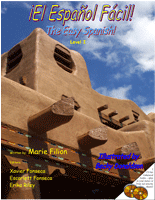
front-coverThis past year we finished up The Easy Spanish or El Espanol Facil! Level I. I found the link through the recommendation of a friend and after watching the introductory video explaining how the program fit a Charlotte Mason style of learning, we decided to investigate the book further. The approach is multi-faceted with listening, narrating aloud, and then writing in Spanish. It is also multi-leveled so you can offer Spanish to all your children with one book and one plan.

I was looking for something fresh to try. We had tried a textbook approach and we had started Rosetta Stone Spanish but neither of those options felt like it was a good fit all by itself. I purchased The Easy Spanish and got started with it right away with my boys.

In my package I received a thick spiral bound textbook with two audio CDs. One of the CDs has pages to print out and use with your children as needed.

dictionary

Personal Dictionary

The textbook is arranged in lessons with corresponding sections on the CD. The textbook is so well organized that my teenagers could work independently and work at their own level of activities. The lessons are written on multiple levels so this plan could be used in a family with children in different grade levels. Their website suggests that with younger children you work through the lessons at a slower pace and take 2-3 years to complete this level. Older students (teens) she suggests 1-2 years depending on how much time each week you take for Spanish.

Each lesson starts with a story that weaves English and Spanish together. You can read it in the text and listen along with the CD. After the story, the CD pronounces the vocabulary and leaves time for your child to respond. There is always a follow-up activity and there is always a time during the week when your child will narrate back in Spanish the general idea of the story from the lesson. There is a special notebook activity that is really a year-long project to have the child tell all about themselves in Spanish. All the notebook pages are included on the CD.

Personal Notebook Page

Personal Notebook Page

The program includes scripture memorization as part of each lesson. Most lessons also have cultural notes that teach more deeply about the culture presented in the story. Geography is also a part of The Easy Spanish program.

If your children are older, there is a specific part of the lesson for independent learners. My boys worked with these assignments and I think it has helped them progress more than anything else. The high school age child is also encouraged to start a journal in Spanish. This was difficult at first but as they built vocabulary, it became easier. Each student is also encouraged to make their own Spanish dictionary with the vocabulary words from each lesson.

One of the CDs also contains Spanish songs to sing along with the lessons. See the link to samples below.

The student is given a weekly assignment sheet where he can check off each particular aspect of the lesson each day. I found this to be a great tool for me to use with my boys, helping them to become more independent.

Independent Learners Go Deeper

Independent Learners Go Deeper

Links to Samples: Song, Lesson, Lesson 2 in both PDF and MP3. I highly recommend that you print out the lesson and go through the MP3 files to really get a feel for the simplicity of using this Spanish program.

I also highly recommend that you go to their homepage and watch the introductory video. I found it very helpful to understand just what was included in the program and an overview of how it words.
The Easy Spanish -Video

So, of all the Spanish programs we have tried so far, this is the best I have found as far as learning practical vocabulary and encouraging the boys to actually have conversations. Using the independent activities, the Charlotte Mason activity, and the journal activities has helped them with their vocabulary and verb work.

Personal journal for independent learners

Personal journal for independent learners

We used The Easy Spanish! everyday of the week, about twenty minutes per day.

If you are looking for a Spanish program for your family and you want it to have a Charlotte Mason flair, this program is worth looking into.

Here is what their website says:

  • Phonetic, incremental, conversational Spanish & high frequency words
  • Spanish Scripture, songs, games and coloring pages
  • Great for homeschool co-op groups
  • Digitally mastered enhanced CD for audio and computer
  • Printable activity sheets: no purchasing consumable activity books or photocopying.
  • Teaches language and grammar through literature based entertaining storylines
  • Does not require prior knowledge of Spanish
  • Set outline of skills per quarter
  • 3 year program for younger students
  • 1 to 2 year program for older students and 1 year Fast track option for teens
  • Cultural flavor of Mexico and South America with optional projects
  • Use of Tomatis and SAMONAS sound theories to facilitate learning
  • Follows Charlotte Mason Method, Bloom’s Taxonomy and high order theories by Dr. Jeanne Chall
  • Edited by and featuring the recorded voices of Native Spanish Speakers from Nicaragua and Venezuela

Written by Barb-Harmony Art mom.  She also blogs at http://www.harmonyartmom.blogspot.com

Aug 192009
 

Why should you give your children regular editing and proofreading exercises as part of their language arts studies?

  1. Editing exercises teach them how read critically for errors. Hopefully, those skills will  carry over into their own writing as they go through the drafting, revising, and editing steps of the writing process.
  2. Editing exercises are the best way to teach grammar and usage – in the context of real writing, versus the forced situation of a textbook activity.
Daily Paragraph Editing

Daily Paragraph Editing (Grade 5) by Evan Moor

In an ideal world, mom would select a literature passage from something her child is studying, make some changes, and have the child find the errors. But few of us have time to do that each day. That’s why I love Daily Paragraph Editing by Evan Moor.

Daily Paragraph Editing is available in printed format or ebook format. (I get mine from CurrClick and download it immediately. Then I print out the pages I need each week.) You also have the option of a less expensive student workbook if you feel confident that you don’t need the answer keys. There is a book for each grade 2-6.

Each book has 36 weeks of lessons, each week with four paragraphs, all centered on a certain theme. The themes vary from academic to daily topics, for example baseball, eating pizza, George Washington Carver, or John Muir.  Each paragraph takes up half of a page, and the suggested corrections are on a separate page. On the student’s portion, there is a hint telling them what type of corrections to especially watch for. But the errors are not limited to that one thing. If you want to know exactly what errors to look for, refer to the Skills Scope and Sequence chart offered in each Daily Paragraph Editing volume. On the fifth day of the week, the student can use the list of weekly writing topics, each of which is a continuation of the weekly theme.

Because you’re doing a short editing practice each day, even these toughest punctuation rules are going to finally sink in through the repetition. And for some reason, students find it more enjoyable to look for capitalization problems in some one else’s work rather than to learn a capitalization lesson. But you can use the editing practice as a springboard to those types of mini lessons.

Suggestions for Using Daily Paragraph Editing

  • Give the child the passage, and have him read it. Reading aloud is preferable, because doing so often helps him catch errors, especially with punctuation, fragments, and run-on sentences.
  • Make sure he understands the passage before making the corrections. Take time to discuss any new terms or ideas.
  • Give him time with a “red pen” and the passage, using standard proofreading marks to indicate his corrections directly onto the passage.  (The book even includes a chart of proofreading marks  at the front of the book.)
  • Check his corrections against the ones on the answer key. I actually go sentence by sentence, making my daughter tell me what correction she made and why. If she doesn’t know why, then we refer to a writer’s handbook for the grammar or usage rule. The book itself includes a short language handbook with rules for writing and editing. This is a great opportunity for a mini grammar lesson.
  • You can record any errors that were missed on the Skills Scope and Sequence chart. As you see patterns emerging, you can stop and do more intensive grammar or mechanics lessons.

Remember that the corrections are not always written in stone. English is flexible, and there are often many ways to correct a problem. So be willing to consider alternative corrections. As long as the passage is free from error, the student has successfully edited it.